
Care Under Siege
Episode 1: The Shape of the Silence


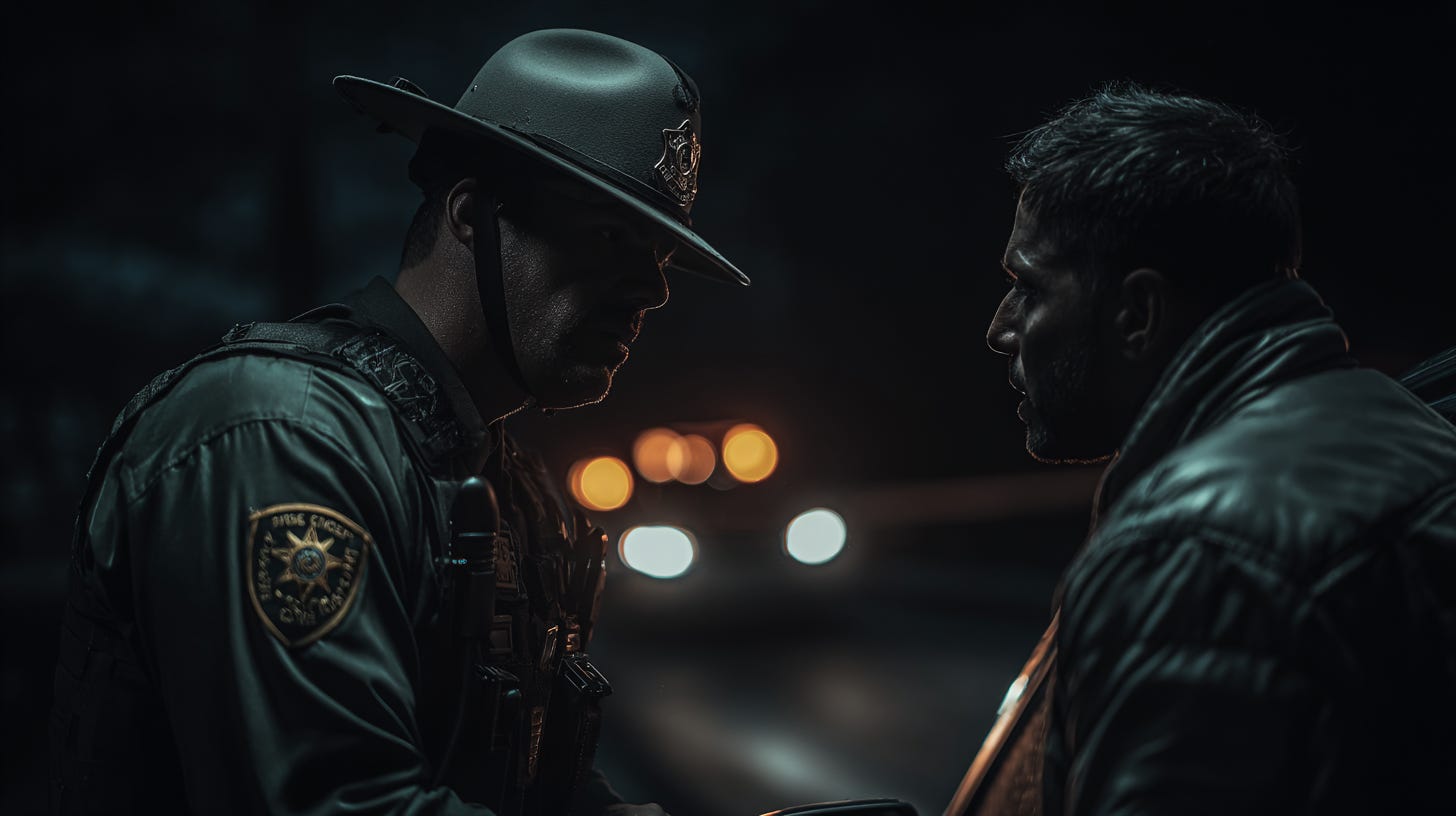
Author’s Note
I’m known primarily for my nonfiction work—science, medicine, politics—but the truth is, most of my actual writing has always been creative. Fiction. Storytelling.
There’s a reason for that.
Fiction helps people understand. Fiction helps people care.
When you write—really write, not just report—you become curious about people’s lives in ways that transcend data points. You wonder about their challenges, their identities, the small moments that shape them. You start seeing entire worlds in brief encounters.
As a fiction author, I empathize deeply with my characters. I become emotionally invested in them—their struggles, their hopes, their survival. That emotional investment has served my medical practice well. It means I can extrapolate from a five-minute encounter to an entire identity, a family history, a life shaped by forces the patient may never explicitly name.
My goal with this series is to make you care. In an attention economy where caring about real people—especially people who aren’t us—has become almost impossibly hard, I want to create space for recognition. For pattern-seeing. For the kind of understanding that moves beyond statistics into the territory of inevitability.
These are fictional depictions based on real patterns and real history from other countries where things that seemed impossible became routine.
The grandparents in these stories are composites. The families are invented. But the mechanisms—the slow erosion of safety, the targeting that begins elsewhere and moves closer, the healthcare systems that become instruments of fear—those are documented. Those are real.
This work is part of Diosa Ara and the Labora Collective—a framework for understanding women’s health not just through medicine, but through the systems that determine who gets care and who doesn’t, who survives and who is discarded.
What follows is not speculation. It’s recognition.
In solidarity, Yamicia D. Connor
Part One: Reina
Union City, New Jersey — January 2026
Reina notices the rosary first.
Not that Abuelita carrying a rosary is unusual—she’s always had one in her purse, tucked in her pocket, wound around her wrist like jewelry. But this is different. This is Abuelita praying the rosary at the kitchen table at two in the afternoon on a Wednesday, her lips moving silently, her fingers working the beads.
It’s January 2026, and Reina is sixteen years old, and her great-grandmother has been doing this—the praying, the muttering, the abrupt channel-changing—for months now. But lately it’s gotten worse.
Reina sets her backpack down by the door. Their apartment in Union City smells like sofrito and the jasmine-scented candles Abuelita lights when she’s nervous, which lately is always. The TV is on but muted, showing footage Reina has seen a hundred times in the past few weeks: people being led away in handcuffs, families crying on sidewalks, protesters holding signs, federal agents in tactical gear.
Abuelita’s eyes flick toward the screen, then back to her rosary. Her lips keep moving.
“Abuelita.” Reina drops her backpack. “You okay?”
Her great-grandmother doesn’t look up. Just keeps praying, keeps counting. Hail Mary, full of grace. The beads click against each other.
This isn’t the Abuelita Reina knows.
When Trump got elected in November 2024, Abuelita walked around the house for a week muttering curse words in Spanish—insulting every man who’d ever lived, basically. That typical contempt she has for the type of man who’s dumb as a doorknob but convinced he’s a regular Einstein? It was on full display.
But soon enough she seemed to forget about it. Life went on. Christmas came. We got over it. It looked like it was gonna be another four years of foolishness, but we’d survive it.
Until the bill approving ICE funding got passed.
That’s when it started. That’s when the happy-go-lucky grandmother shifted into someone carrying a tension that no one alive—at least in our family—had ever seen her carry before.
By December, Abuelita was turning off the TV mid-broadcast, jabbing the remote like the television had personally offended her. She’d stand there in the living room, staring at the blank screen, shaking her head, and then she’d walk away without saying anything.
Reina asked her once what was wrong.
Abuelita just looked at her and said, “Nothing you need to worry about yet, mija.”
But Reina could see it. The novenas. The candles. The way Abuelita’s hands trembled just slightly when she poured her coffee in the morning.
And then, sometime in late December when the news shifted from threats to action, when the images on TV started showing raids in Los Angeles, Reina found Abuelita in the living room at dawn, rosary in hand, staring at footage of families being separated at an apartment complex in Echo Park.
“Abuelita.” Reina whispered, not wanting to startle her. “What are you praying for?”
Abuelita didn’t turn around. Just tilted her head slightly toward the muted television. “For them.”
The families. The ones on the screen. The ones who looked like them.
Now it’s January, and Minnesota is burning on every channel—not literally, but close enough. Federal agents everywhere. Hospitals. Clinics. Raids in neighborhoods. People hiding. A woman shot dead in her car. A toddler taken from her mother.
And Abuelita is praying more than ever.
Reina watches her great-grandmother’s fingers move over the beads. She’s seen Abuelita pray plenty of times—before meals, at church, when someone is sick. But this is different. This is constant.
“Abuelita.” Reina tries again. “Who are you praying for now?”
Abuelita’s fingers still. She doesn’t look up right away. When she does, her eyes are tired.
“For you,” Abuelita says quietly.
Reina freezes.
“For me? Why? What’s wrong?”
Abuelita sets the rosary down on the table. She folds her hands in her lap and looks at Reina.
“Mija,” Abuelita says. “People never learn. No matter how much suffering. The next generation never learns from the one before.”
Reina frowns. “What do you mean?”
“You think this doesn’t touch you.” Abuelita nods toward the muted TV. “You think because we’re citizens, because we’ve been here for generations, because we live in New Jersey and not Los Angeles or Minnesota or Texas—you think that means we’re safe.”
“Aren’t we?”
Abuelita reaches across the table and takes Reina’s hand. Her skin is warm.
“Mi amor,” she says. “I need you to listen to me. Really listen.”
Reina nods.
“This is how it always starts,” Abuelita says. “It always starts like this.”
“Like what?”
“Slow. Quiet. It starts with other people. People you don’t know. People who don’t look like you, or live where you live, or talk the way you talk. And you watch it happen and you think, That’s terrible, but you also think, That won’t happen to me. Because you’re different. Because you have papers. Because you were born here. Because you’ve never done anything wrong.”
She squeezes Reina’s hand.
“These things work because they never come for everyone at once. They would never be successful if everyone got hurt at once. If everyone was attacked all at once. If the world just crashed down on all of us at the same time. No. It works because it starts with them. The ones who are easiest to blame. The ones no one will defend. And everyone else thinks, Thank God it’s not me.“
She squeezes Reina’s hand.
“But what history shows us, mija, is that it will be you. Eventually. It always is. The people who think they’re safe—they’re never safe. They just have more time.”
“Abuelita, you’re—” Reina stops herself.
“You think I’m being hysterical,” Abuelita says.
“No, I—”
“Hysterical is white people afraid of every Latino person they see because somewhere in Texas, one time, some woman might have been harmed by someone they think was an immigrant. That’s hysterical. That’s manufactured fear designed to justify cruelty.” She leans forward.
“This?” She gestures toward her rosary, toward the muted television. “This is not hysteria. This is memory. This is recognition. This is me remembering what I’ve already lived through once and praying to God I don’t have to watch you live through it too.”
“What are you talking about?”
Abuelita is quiet for a long moment. Then she says, “When they start coming for the hospitals and the churches. When they start coming for the doctors and the priests. You have less time than you think.”
“Coming for—what do you mean, coming for—”
“Sit,” Abuelita says. “Let me tell you a story.”
Abuelita’s Testimony
Abuelita was twenty-three years old when the soldiers came to her town.
She tells Reina this part first, as if to establish something. To make sure Reina understands that she wasn’t a child when it happened. She was a woman. She was a nurse. She had a husband and a baby daughter—Reina’s grandmother—and a life she thought was safe.
“I didn’t grow up afraid,” Abuelita says. “I grew up normal. I went to school. I had friends. I fell in love. I got married. I worked at a clinic in the mountains where people came from the villages for care. We treated everyone. Farmers, teachers, people with no papers, people who spoke languages the government didn’t recognize. It didn’t matter. If you were sick, we helped you.”
Reina knows pieces of this. She knows Abuelita came from somewhere else, came to the United States when Reina’s grandmother was a child. But Abuelita has never talked about why. Never talked about what they were leaving.
“It didn’t start with soldiers,” Abuelita says. “That’s what people don’t understand. They think it begins with the raid. With the arrest. With the announcement on the news. But that’s not where it starts.”
“Where does it start?”
“It starts when people stop coming,” Abuelita says. “The clinic is still open. The doctors are still there. The medicines are still on the shelves. But the waiting room is empty. And everyone pretends it’s because people are healthy. Or busy. Or they went somewhere else. No one says what everyone knows—that people are afraid. That they’ve heard what happens to people who show their faces in places where they can be counted.”
She looks at Reina.
“By the time the soldiers came to the clinic, mija, it was already over. The clinic was already dead. They were just burying what fear had already killed.”
“What happened?”
“They came looking for someone. A man who had been at a protest. They said he was a terrorist. They said he was dangerous. I didn’t know him. I’d never seen him. But they came to the clinic anyway, asking if we’d treated him. Asking for our records. Asking for names.”
She’s quiet for a moment.
“The doctor I worked with—Dr. Morales, his name was—he told them we didn’t keep those kinds of records. That we didn’t ask for identification. That our job was to heal, not to report. He was very calm when he said it. Very professional.”
Abuelita’s hands are trembling now.
“They arrested him. Right there. In front of all of us. They put him in handcuffs and took him away. We never saw him again.”
“After that, no one came to the clinic at all. Not even for emergencies. Because if the soldiers could take a doctor, what would they do to a patient? If they could arrest someone for not giving names, what would they do to the names themselves?”
She looks at Reina.
“There was a woman. She was pregnant. Maybe seven months. She had started bleeding. Not a lot, but enough that she should have come to the clinic. Everyone knew she should have come. But she didn’t. She stayed home. She was afraid.”
Abuelita’s voice drops.
“By the time her sister finally brought her to us, it was too late. The baby was dead. She almost died. We did everything we could, but—”
She stops. Takes a breath.
“That baby died because of fear. Not because of soldiers. Not because of guns. Because fear had made the clinic—a place that should have been safe—a place where people could be found. Could be counted. Could disappear.”
Reina doesn’t realize she’s crying until Abuelita reaches over and wipes her cheek with her thumb.
“That woman was your great-aunt. My sister.”
“She survived. But she never recovered. Not really. Not in her heart. She was afraid to go to a doctor for the rest of her life. Even here. Even decades later. Even when she was dying.”
Abuelita squeezes Reina’s hand.
“So when I see what’s happening in Minnesota. When I see women hiding from hospitals. When I see pregnant women giving birth at home because they’re afraid. When I see federal agents in emergency rooms and doctors being turned away from their own patients—”
Her voice hardens.
“I am not being hysterical, mija. I am remembering.”
Reina doesn’t know what to say. The apartment feels too small suddenly, the air too thick. She looks at the muted television, at the images cycling through—raids, protests, families separated, a woman dead in Minneapolis, a toddler taken from her mother.
“But Abuelita,” she says finally. “That was—that was a different country. A different time. This is America. We’re citizens. All of us. My mom was born here. I was born here. We have papers. We—”
“So did Renée Good,” Abuelita says quietly.
Reina blinks. “Who?”
“The woman they shot in Minneapolis. She was a citizen. Born here. American her whole life. Mother of three. They shot her anyway. And when a doctor tried to help her, they turned him away. They let her die on the street.”
“And the little girl. The two-year-old they took from her mother. Citizens. Both of them. They took her anyway. Put her on a plane to Texas. Separated them for days.”
She looks at Reina.
“You think papers will save you, mija? You think citizenship will save you? It didn’t save them. It won’t save us. Not when the people in power decide that anyone who looks wrong or sounds wrong or lives in the wrong neighborhood is a threat.”
“But we—”
“We have brown skin. We speak Spanish. We live in Union City. You think that makes us safe?”
Reina doesn’t answer.
“I’m not praying because I think the soldiers are coming tomorrow,” Abuelita says. “I’m praying because I need us to be ready. Because when it’s time—when we have to make a decision that could mean the difference between your future or no future—I need us to be able to act. Quickly. Decisively. Without hesitation.”
“What kind of decision?”
“I don’t know yet. But I’ve lived long enough to know that the decision always comes. And when it does, there’s no time to think. No time to plan. You either act or you don’t. You either trust your instincts or you talk yourself into waiting. And waiting—”
She shakes her head.
“Waiting is what kills people, mija. Waiting for things to get better. Waiting for someone else to fix it. Waiting until you’re sure. By the time you’re sure, it’s too late.”
“I don’t want you to be afraid,” Abuelita says. “But I need you to be awake. I need you to pay attention. To see what’s happening. To understand that it’s not happening over there to other people. It’s happening here. Now. To people like us.”
She stands up slowly, her joints creaking, and walks to the window. She looks out at Union City—the streets she’s walked for forty years, the neighbors she’s known for decades, the bodega on the corner, the church three blocks away.
“When they start coming for the hospitals. When they start coming for the churches. For the doctors. For the priests. For the people trying to help. That’s when you know there’s no more time.”
She turns back to Reina.
“We’re not there yet. But we’re closer than you think.”
Minnesota, January 2026
This Is What Is Happening Right Now
Since late December 2025, approximately 3,000 federal immigration enforcement agents have been deployed across Minnesota—a force described by Governor Tim Walz as an “occupation.” The operation, initially framed as targeting “fraud” and specific immigration violations, has expanded into what public health officials are calling a humanitarian crisis with direct medical consequences.
December 31, 2025: Hennepin County Medical Center Incident
At approximately 4:00 PM on New Year’s Eve, six ICE agents entered Hennepin County Medical Center (HCMC) in Minneapolis without a judicial warrant. They were there to detain a patient who had come to the emergency room seeking medical care. Two armed agents stationed themselves at the patient’s bedside. The patient was shackled to his hospital bed. His family was barred from visiting.
The agents remained for twenty-eight hours—through New Year’s Day—until Minnesota State Senator Matt Klein (a physician), State Senator Alice Mann (also a physician), and Hennepin County Commissioner Angela Conley arrived at the hospital and confronted the agents directly, demanding they leave or produce a valid judicial warrant. ICE withdrew.
The incident was documented by Unidos MN, a community advocacy organization, and confirmed by multiple healthcare workers who were present. HCMC later issued a statement acknowledging the incident but provided limited details, citing patient privacy.
This was not isolated.
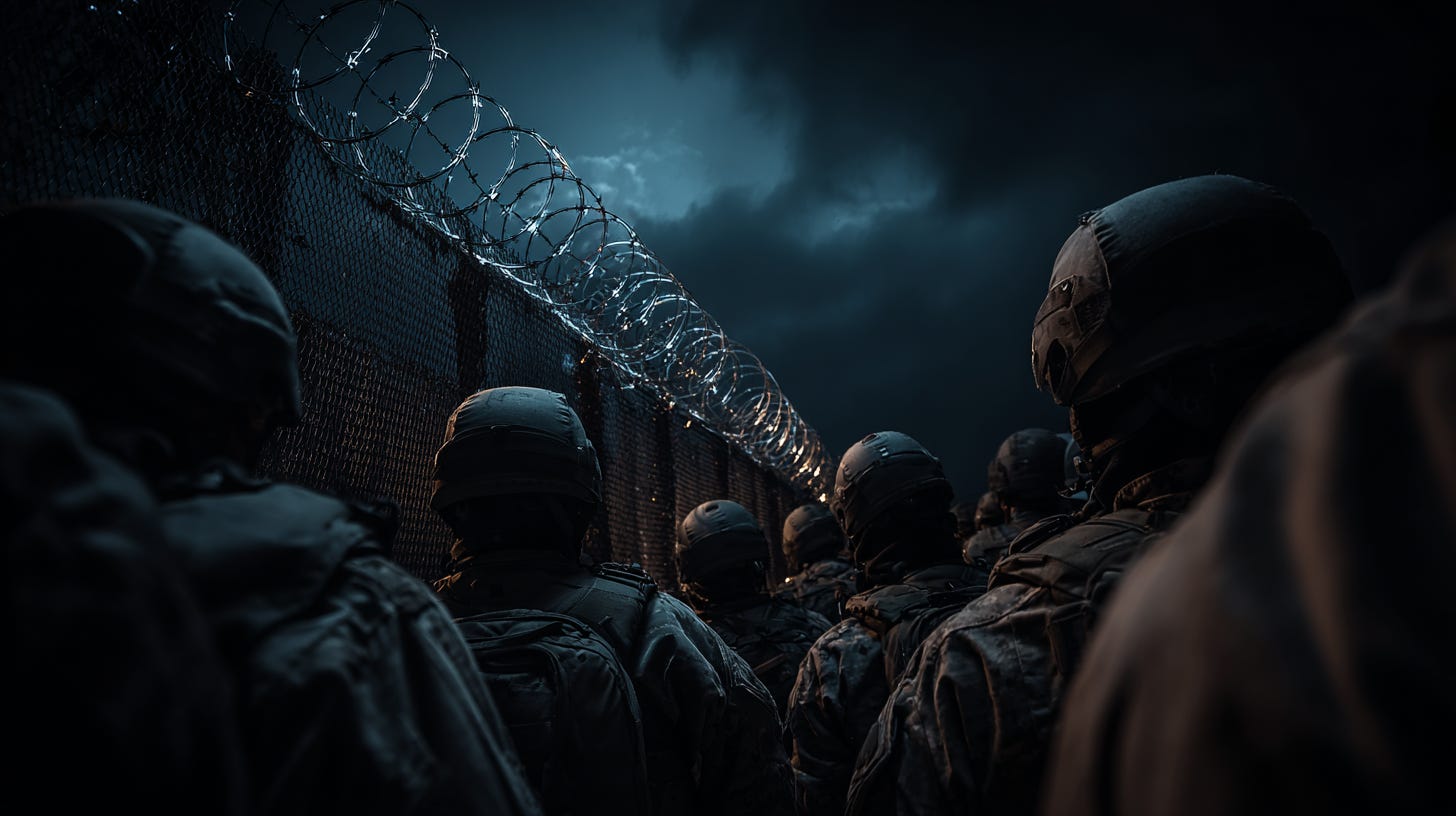
The Pattern: ICE in Healthcare Settings
Between January 1 and January 27, 2026, healthcare providers across Minnesota have documented:
ICE agents waiting in vehicles outside hospital emergency departments in Minneapolis, St. Paul, Rochester, and Duluth
Agents following patients from parking lots into clinic waiting rooms
Agents requesting patient information from front desk staff without warrants
Agents insisting on remaining in examination rooms during medical procedures, including obstetric exams
Agents stationed near pharmacy entrances
Agents conducting traffic stops within 100 yards of community health centers
Dr. Erin Stevens, representing the Minnesota chapter of the American College of Obstetricians and Gynecologists (ACOG), stated at a January 20 press conference: “We are seeing a complete collapse of prenatal care utilization in immigrant communities. Women are choosing to give birth at home rather than risk coming to a hospital.”
Clinical Consequences: Documented Cases
At the January 20, 2026 press conference held outside the Minnesota State Capitol, more than fifty physicians—representing family medicine, obstetrics, pediatrics, emergency medicine, and internal medicine—presented documented cases of medical harm directly attributable to enforcement fear:
Case 1: Home Birth Due to Fear
A family physician (who requested anonymity to protect the patient) reported: A patient in her third trimester stopped attending prenatal appointments in early January. When a nurse finally made phone contact, the patient was in active labor at home, eight centimeters dilated, too afraid to call 911 or go to the hospital. The nurse drove to the patient’s apartment and assisted with delivery approximately two hours later. Both mother and infant survived, but the delivery occurred without pain management, without emergency medical backup, and without the capacity to address complications had they arisen.
Case 2: Neonatal Jaundice
A pediatrician reported: Multiple newborns have presented with moderate to severe jaundice requiring phototherapy or exchange transfusion—conditions that could have been managed with routine outpatient care if parents had brought infants for standard 3-5 day postpartum checkups. Parents explicitly stated they delayed care because they had heard federal agents were present at clinics.
Case 3: Diabetic Ketoacidosis
An internal medicine physician reported: A 34-year-old patient with Type 1 diabetes, previously well-controlled, presented to the emergency department in diabetic ketoacidosis (DKA)—a life-threatening condition. The patient had been rationing insulin rather than leaving her apartment to refill her prescription. She had heard about ICE presence at pharmacies and at the clinic where she normally received care. When asked why she didn’t call for help sooner, she stated: “I thought if I went into a coma at home, at least my children wouldn’t see me arrested.”
Case 4: Postpartum Hypertension
An OB-GYN reported: A postpartum patient, two weeks after delivery, presented to the emergency department with severe hypertension (blood pressure 180/110) and symptoms of preeclampsia. She had missed her one-week postpartum checkup because she was afraid to leave her home. She came to the hospital only after experiencing a severe headache and visual changes—symptoms indicating possible stroke or seizure. She required immediate treatment with IV antihypertensives and magnesium sulfate. Her condition was entirely preventable with routine postpartum care.
Case 5: Untreated Appendicitis
An emergency physician reported: A patient presented with ruptured appendicitis and peritonitis—a surgical emergency. The patient had experienced abdominal pain for four days but delayed seeking care. Time to treatment matters significantly in appendicitis; delay increases risk of perforation, sepsis, and death. The patient explicitly stated fear of ICE presence at the hospital was why they waited.
Case 6: Infant Exposed to Tear Gas
A pediatrician reported: A six-month-old infant was hospitalized with respiratory distress after being exposed to tear gas during an ICE operation in north Minneapolis. The infant was in a car with their family when tear gas was deployed nearby during an enforcement action on approximately January 12, 2026. The child required nebulizer treatments and observation overnight.
The Numbers: Quantifying Care Avoidance
While comprehensive data collection is ongoing, preliminary reports from Minnesota community health centers indicate:
40-60% decrease in prenatal care appointments among immigrant patients (documented and undocumented) in January 2026 compared to January 2025
Approximately 30% decrease in pediatric well-child visits for children in mixed-status families
Sharp increase in requests for home birth services, including among patients with high-risk pregnancies who would normally deliver in hospitals
Decrease in prescription refills for chronic disease management (diabetes, hypertension, asthma) among immigrant patients
Increase in emergency department visits for preventable complications—conditions that could have been managed in outpatient settings if patients had sought care earlier
Dr. Lisa Mattson, a family physician practicing in south Minneapolis, stated: “We are watching years of trust-building with marginalized patients evaporate in days. Patients who felt safe coming to us for care now feel that any medical visit could result in detention or family separation.”
Policy Context: The Double Bind
On January 1, 2026, Minnesota terminated MinnesotaCare health insurance coverage for approximately 15,000 undocumented adults over the age of 18. This policy change—a reversal of the state’s 2023 expansion of coverage—left thousands of low-income residents, including pregnant women and people managing chronic conditions, without health insurance overnight.
The timing created what public health experts call a “double bind”: the simultaneous loss of health coverage and the escalation of enforcement fear. Seeking care became both financially prohibitive and physically dangerous.
Community health centers that serve large immigrant populations reported immediate impacts:
Patients calling to cancel appointments, stating they could no longer afford care
Patients arriving at clinics and discovering they were no longer insured
Confusion about emergency Medicaid coverage for pregnancy-related care
Increased burden on safety-net providers operating on already-thin margins
The Deaths
Two civilians have been killed by federal agents in Minnesota since January 2026.
January 7, 2026 — Renée Nicole Good
Renée Nicole Good, 37, a U.S. citizen, mother of three, and nursing assistant at the VA hospital, was shot and killed by ICE agent Jonathan Ross during an enforcement operation in Minneapolis.
Federal officials claimed Good attempted to run over Agent Ross with her vehicle, justifying the use of lethal force. However, video footage reviewed by the Minnesota Reformer, Reuters, and other news organizations shows Good’s vehicle steering away from agents, not toward them—consistent with an attempt to flee, not to assault.
A physician, who was nearby and heard the gunshot, rushed to the scene to render aid. The physician reported that Good still had a pulse eight minutes after being shot. ICE agents on scene refused to allow the doctor to provide medical assistance, citing the ongoing investigation. Good died at the scene.
Her family has filed a wrongful death lawsuit. The White House initially labeled Good a “domestic terrorist”—a characterization disputed by Minneapolis Mayor Jacob Frey, Governor Tim Walz, and state legislators who reviewed the available evidence.
January 24, 2026 — Alex Pretti
Alex Pretti, 22, a Minnesota resident, was shot and killed by federal agents (ICE and Border Patrol) in a suburb of Minneapolis during what officials described as an enforcement action. DHS claims Pretti was armed and posed a threat. Witnesses dispute this account, stating Pretti was running away.
This marked the second fatal shooting in just over two weeks.
The Toddler
On January 22, 2026, ICE agents conducted a traffic stop in Minneapolis, detaining Elvis Tipán Echeverría, an Ecuadorian father, and his two-year-old daughter, C.R.T.V.
Agents broke the car window to extract father and child. The mother, watching from her home, was prevented from approaching when agents refused to allow the father to hand the toddler to her.
By late afternoon, attorneys from the Immigrant Law Center of Minnesota had secured an emergency order from a federal judge requiring ICE to release the child immediately and prohibiting removal of either father or child from Minnesota. The order specified a deadline of 9:30 PM that evening, citing “irreparable harm” to the child.
At 8:30 PM—one hour before the court-mandated deadline—ICE agents put the two-year-old and her father on a commercial flight to Texas. The child traveled without a car seat, without her mother, and without any legal justification that would supersede a federal judge’s direct order.
The case went before U.S. District Judge Katherine Menendez-Prida, who stated ICE’s actions raised questions of “bad faith” and “potential contempt of court.”
The child was returned to Minnesota on January 23, 2026, following national media attention and additional court intervention. The family was reunited after approximately 36 hours of separation.
The image of a two-year-old taken from her mother, placed on a plane alone, while a federal court order was ignored—this image has become emblematic of what Minnesota officials describe as federal overreach and what community advocates describe as cruelty.
Clinical Ethics Violations
The Minnesota Medical Association, in a January 21, 2026 statement, outlined what it characterized as “systematic violations of medical ethics and patient rights”:
Patient Privacy: ICE agents demanding patient information without judicial warrants violates HIPAA protections and the physician-patient relationship
Informed Consent: Patients cannot provide truly informed consent for medical procedures if federal agents are present in examination rooms
Access to Care: The presence of enforcement in healthcare settings creates a barrier to care that disproportionately harms vulnerable populations
Professional Autonomy: Physicians report being unable to exercise independent medical judgment when law enforcement presence overrides clinical decision-making
Non-Discrimination: The current enforcement pattern creates a two-tiered healthcare system in which patients’ access to care depends on perceived immigration status, actual immigration status, or racial appearance
Dr. Matt Klein, Minnesota State Senator and practicing physician, stated: “When doctors are prevented from providing care, when patients are shackled in hospital beds, when families are too afraid to bring their children to the pediatrician—this is not law enforcement. This is a public health crisis created by policy.”
The Provider Response
On January 6, 2026, approximately 100 healthcare workers—physicians, nurses, hospital staff—gathered outside Hennepin County Medical Center’s emergency department to demand institutional policies protecting immigrant patients. The event was organized by Unidos MN in partnership with healthcare worker unions and professional organizations.
The healthcare workers called for:
Hospital policies requiring ICE agents to present valid judicial warrants before entering patient care areas
Notification protocols ensuring patients and families are informed if law enforcement is on-site
Training for security staff on how to respond to ICE presence
Clear statements from healthcare institutions affirming commitment to treating all patients regardless of immigration status
Similar rallies occurred at clinics and hospitals in St. Paul, Rochester, and Duluth throughout January.
On January 20, 2026, more than fifty physicians held a press conference at the Minnesota State Capitol, presenting the documented cases outlined above. The physicians—many of whom stated they had been afraid to speak publicly for fear of retaliation—described the current situation as “a moment of crisis in our state” comparable to the early COVID-19 pandemic.
Dr. Stevens, of Minnesota ACOG, concluded her remarks by stating: “Pregnancy does not pause for politics. Women are giving birth whether or not they feel safe going to a hospital. Babies are getting sick whether or not their parents can risk taking them to the doctor. This is not a theoretical problem. This is not a future concern. This is happening right now, and women and children are being harmed.”
Community Response: Mutual Aid and Defense
In the absence of institutional protection, community members have organized grassroots response networks.
In the Cedar-Riverside neighborhood of Minneapolis—home to a large Somali immigrant community—a group calling themselves the “Mamas of Cedar” has established a neighborhood patrol system. Women wearing neon safety vests monitor streets for ICE presence, maintain WhatsApp alert groups, and provide mutual aid (groceries, medication pickup, childcare) for families afraid to leave their homes.
Similar networks have formed in other neighborhoods with large immigrant populations. Volunteers deliver food, arrange telehealth appointments, provide transportation to medical appointments under community protection, and maintain rapid-response systems to document enforcement actions.
Churches across the state have opened their doors as sanctuary spaces, though the legal protections of sanctuary have been tested—at least one instance of ICE agents entering a church in St. Paul has been documented.
Legal organizations, including the Immigrant Law Center of Minnesota and ACLU-MN, have established hotlines for reporting enforcement abuses and have filed multiple emergency motions seeking court intervention in cases where ICE actions appear to violate due process or court orders.
This Is Not Speculation
Every incident described in this section is documented through one or more of the following:
Direct testimony from healthcare providers
Court filings and judicial orders
Video evidence
Advocacy organization documentation
Independent journalism from Minnesota Public Radio, Star Tribune, Minnesota Reformer, Sahan Journal, and other outlets
Official statements from state and local government officials
This is not warning. This is not projection. This is documentation of what is happening now, in January 2026, in Minnesota.
The clinical term for what is occurring is “chilling effect”—the suppression of behavior through fear rather than direct prohibition.
But that language does not capture what is happening to actual bodies. To pregnancies. To infants whose jaundice progresses untreated. To women whose blood pressure rises unchecked. To diabetics whose glucose spirals in darkened apartments.
The physicians at the Capitol, many of them in tears, were not speaking in abstractions. They were describing patients they know by name. Children they have cared for since birth. Families they have served for years.
One physician, who requested anonymity, said: “I took an oath to do no harm. But I am watching harm unfold in real time, and the harm is being done by the presence of law enforcement in spaces that should be healing spaces. I don’t know how to practice medicine in these conditions. I don’t know how to tell a pregnant woman she’s safe in my exam room when I can’t guarantee that federal agents won’t be waiting for her in the parking lot.”
Another said: “This is what it looks like when a society decides that some lives matter less than others. When some children deserve medical care and others don’t. When some mothers are allowed to give birth safely and others are told to hide.”
Minnesota—a state that prides itself on its healthcare systems, its public health infrastructure, its progressive policies—is confronting what happens when enforcement supersedes care, when documentation status determines access to healing, when fear becomes a more powerful force than any virus or chronic disease.
And the rest of the country is watching.
Because what is happening in Minnesota is not contained to Minnesota. It is a preview.
Part Two: Margaret
Texas, Late January 2026
Margaret Huang doesn’t watch the news anymore.
Not because she doesn’t care. She cares too much. It’s become a problem. Her daughter keeps telling her she’s “doom-scrolling,” which Margaret thinks is a silly term but probably accurate. So she’s stopped. Cold turkey. No news. No social media. Just Jeopardy and the Golden Girls reruns and the home improvement shows where everything gets fixed in forty-five minutes.
Her daughter Lisa thinks this is progress. Margaret knows better.
She’s seventy-four years old. Her parents came from Taiwan in the 1960s. She was born in Houston, grew up in Sugar Land, spent her whole life in Texas except for four years at UT Austin. She has grandchildren now—Lisa’s kids, eight and eleven—who roll their eyes when she tries to teach them Mandarin and who think boba tea is “just a thing” rather than something their grandmother had to drive to Chinatown for once a month when she was young.
Margaret has voted in every election since 1972. She pays her taxes. She volunteers at the library. She has never broken a law more serious than a traffic violation.
She is, by all reasonable measures, safe.
But she doesn’t feel safe.
It started small. A man at the grocery store who stared at her too long, then muttered something she couldn’t quite hear but understood the shape of. A neighbor who stopped waving. A comment on NextDoor about “people who don’t belong here” that Margaret knew, somehow, was aimed at her even though no one said her name.
Then the news started showing raids in California, Minnesota, New York. Federal agents everywhere. People being detained in parking lots, at bus stops, outside schools.
Lisa keeps saying, “Mom, you’re a citizen. You were born here. You have nothing to worry about.”
And Margaret wants to believe her. She does. But there’s a part of her—the part that remembers her parents’ stories, the part that listened when they told her what it was like to be Chinese in America during certain years, during certain political climates—that part of her knows better.
Her father used to tell a story about 1982. About Vincent Chin, the Chinese American man beaten to death in Detroit by two white men who thought he was Japanese. Who blamed him for the auto industry’s problems. Who got probation. Probation. For beating a man to death with a baseball bat.
“It doesn’t matter what papers you have,” her father had said, his voice quiet and careful, “if someone decides you’re the problem. If they decide you look like the enemy.”
Margaret thinks about that now, sitting in her living room in Sugar Land with the TV muted on a cooking show. She thinks about the grocery store. The neighbor. The comment online. She thinks about Minnesota. About Los Angeles. About the woman shot in her car. The toddler taken from her mother.
She thinks about how easy it would be for someone to decide she looks like the problem.
Lisa is picking up the kids from school today. Margaret usually does it—she loves that time with them, loves hearing about their days, loves the way they chatter in the backseat about teachers and friends and whatever video game is popular that week.
But today she said she wasn’t feeling well. Which wasn’t exactly a lie. She doesn’t feel well. She feels afraid.
And she doesn’t want to take the kids with her if she gets stopped. If someone asks her for ID. If someone decides she doesn’t look American enough.
The doorbell rings.
Margaret jumps. She wasn’t expecting anyone. Lisa has a key. The mail doesn’t come this late.
She walks to the door slowly. Looks through the peephole.
It’s her neighbor from three houses down. The one who stopped waving. He’s holding something—a package, maybe.
Margaret doesn’t open the door.
She watches through the peephole as he waits. Rings the bell again. Looks around. Finally, he leaves the package on the doorstep and walks away.
Margaret waits a full five minutes before she opens the door.
It’s just a package. Something she ordered online and forgot about. The neighbor must have gotten it by mistake. But her hands are shaking as she brings it inside.
She calls Lisa.
“Mom?” Lisa answers on the second ring. “You okay? I’m about to get the kids—”
“I’m fine. I just—I need to talk to you about something.”
“What’s wrong?”
Margaret looks around her living room. At the photos on the wall. At the furniture she’s had for twenty years. At the life she’s built here, in this house, in this neighborhood, in this country.
“I think we should talk about what we would do. If things got worse.”
There’s a pause on the other end of the line.
“Mom,” Lisa says, and her voice has that careful tone people use when they think you’re overreacting. “Things aren’t going to get worse. You’re safe. We’re all safe.”
Margaret closes her eyes.
“I hope you’re right.”
But she doesn’t believe it.
Back to Union City
Reina can’t sleep that night.
She lies in bed staring at the ceiling, listening to the sounds of the apartment—the hum of the refrigerator, the creak of the pipes, the distant sound of traffic on Bergenline Avenue. Normal sounds. Safe sounds.
Except they don’t feel safe anymore.
She keeps thinking about what Abuelita said. About the clinic. About the pregnant woman who died because she was too afraid to seek help. About soldiers and doctors and fear that killed people just as surely as bullets.
She thinks about Minnesota. About women hiding. About a baby born at home because the hospital felt too dangerous. About a mother shot in her car. A toddler taken.
She thinks about what Abuelita said about papers. About citizenship. About how none of it matters if someone decides you look wrong.
Her phone buzzes. A text from her best friend Camila: you up?
yeah, Reina types back. can’t sleep.
same. did you see the news?
Reina hasn’t. She’s been avoiding it since the conversation with Abuelita. But now she picks up her phone and opens Twitter.
The first thing she sees is footage from Minnesota. Federal agents in tactical gear surrounding a house. A family being led out in handcuffs. Kids crying. Neighbors shouting. Someone screaming “They’re citizens! They’re citizens!” over and over again.
Reina closes the app. Opens Instagram instead. Same thing. TikTok. Same thing. It’s everywhere.
She looks at the time. 2:47 AM.
She gets out of bed and walks quietly to the kitchen. The apartment is dark except for the small light above the stove that Abuelita always leaves on. Reina can see Abuelita’s door—closed, but light seeping underneath. She’s still awake too.
Reina stands in the hallway, not sure if she should knock.
But then the door opens, and Abuelita is standing there in her nightgown, rosary in hand, looking at Reina.
“Can’t sleep either?” Abuelita says softly.
Reina shakes her head.
Abuelita opens the door wider. “Come here, mija.”
Reina goes to her. Lets Abuelita pull her into a hug that smells like lavender and prayer candles and something else—something old and sad and fiercely protective.
“I’m scared.”
“I know. But being scared is not the same as being helpless. You understand me? Fear is information. It tells you to pay attention. To be ready. But it doesn’t have to paralyze you.”
She pulls back and looks at Reina.
“Your mother and I, we’ll talk tomorrow. About plans. About what we would do if we needed to leave quickly. If things got worse. I know you think I’m being—”
“I don’t think you’re being hysterical. Not anymore.”
Abuelita’s expression softens. She cups Reina’s face in her hands.
“You’re so young. Too young to have to think about these things. But that’s not the world we’re in anymore, is it?”
Reina doesn’t answer. Because the answer is obvious.
“Come. Let’s say a rosary together. For all of us. For everyone who’s afraid tonight.”
They sit together on Abuelita’s bed, the rosary between them, and they pray. Not because they believe prayer will stop what’s coming. But because sometimes prayer is the only thing that helps you survive what you can’t stop.
And outside, Union City sleeps. Or tries to. While in Minnesota and Texas and California and a hundred other places, families lie awake in the dark, making the same calculations, having the same conversations, feeling the same cold certainty settling into their bones:
This is how it starts.
It always starts like this.
END EPISODE 1
Content note: This series discusses immigration enforcement, pregnancy complications, medical emergencies, and state violence. The narratives are composite stories grounded in documented patterns of harm. If you are experiencing a medical emergency, please seek care. Your health matters. You matter.
Care Under Siege is a work of documentation and witness. All Minnesota incidents cited are based on verified reporting from January 2026. This is not speculation. This is pattern recognition.
Care Under Siege is a Labora Collective series.